01 / Case Study
UI/UX · Digital Platform · Cybersecurity
A clearer way to navigate a complex cybersecurity ecosystem.
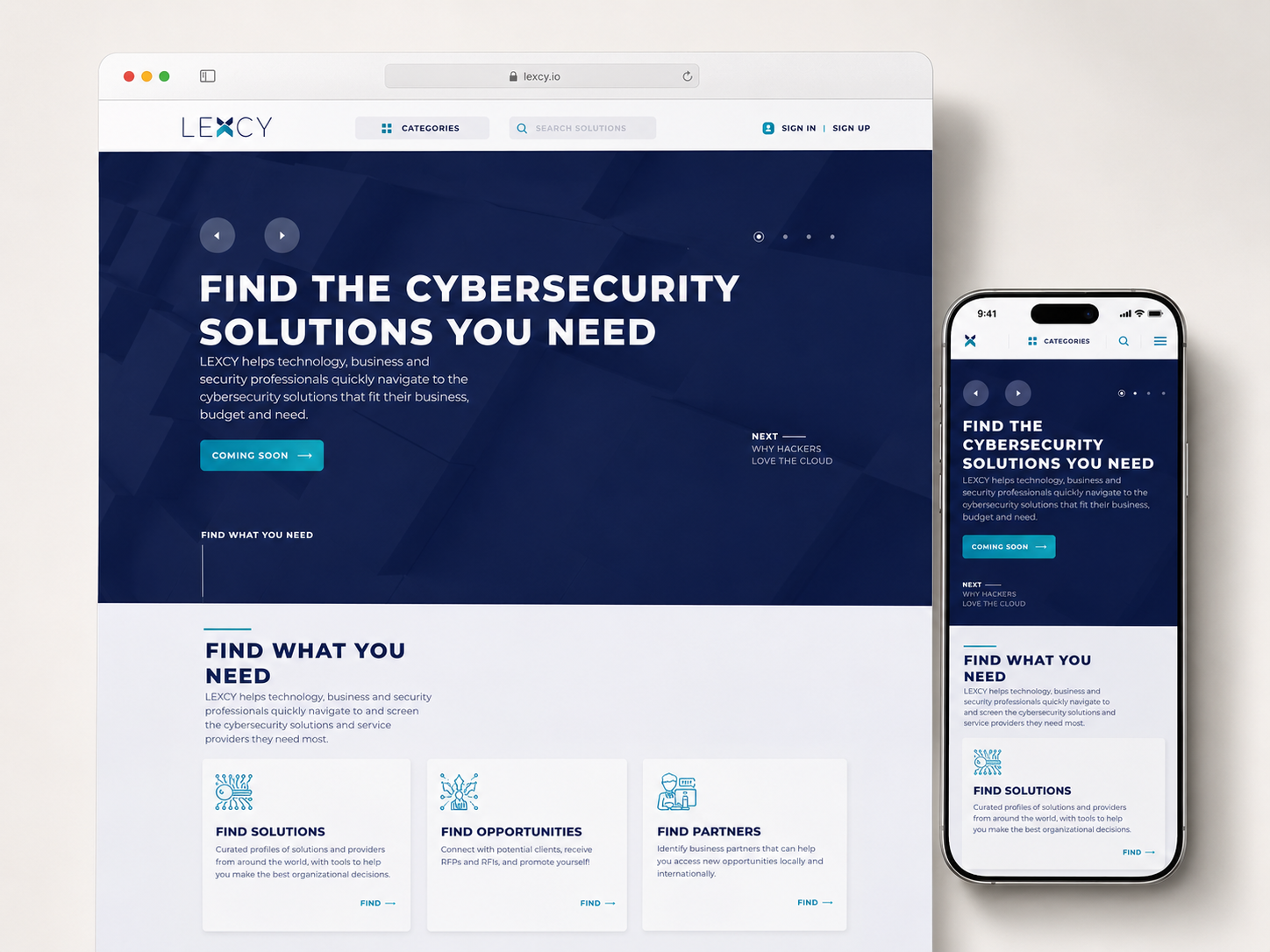
Lexcy is a cybersecurity discovery platform designed to help businesses and professionals find relevant solutions, opportunities and partners within one structured digital experience.
The project developed over several years and required a responsive interface system capable of organising large volumes of technical and categorised information across desktop, tablet and mobile.
- Industry
- Cybersecurity and Technology
- Project period
- 2022–2026
- Role
- UI/UX Designer
- Platforms
- Desktop, Tablet, Mobile
- Tools
- Figma, Illustrator, Photoshop
- Status
- Live Beta
/ Overview
Overview.
Lexcy is a cybersecurity discovery platform created to help businesses and professionals find relevant solutions, opportunities and partners within one structured experience.
I led the UI/UX direction, translating platform requirements into responsive layouts across desktop, tablet and mobile.
/ My role and contribution
My role and contribution.
- 01UI/UX direction across desktop, tablet and mobile
- 02Information hierarchy and discovery-journey structure
- 03Reusable category, record and content components
- 04Visual hierarchy, spacing and long-page rhythm
- 05Consistent application of the Lexcy identity
- 06Interface layouts and assets prepared for development
/ Platform overview
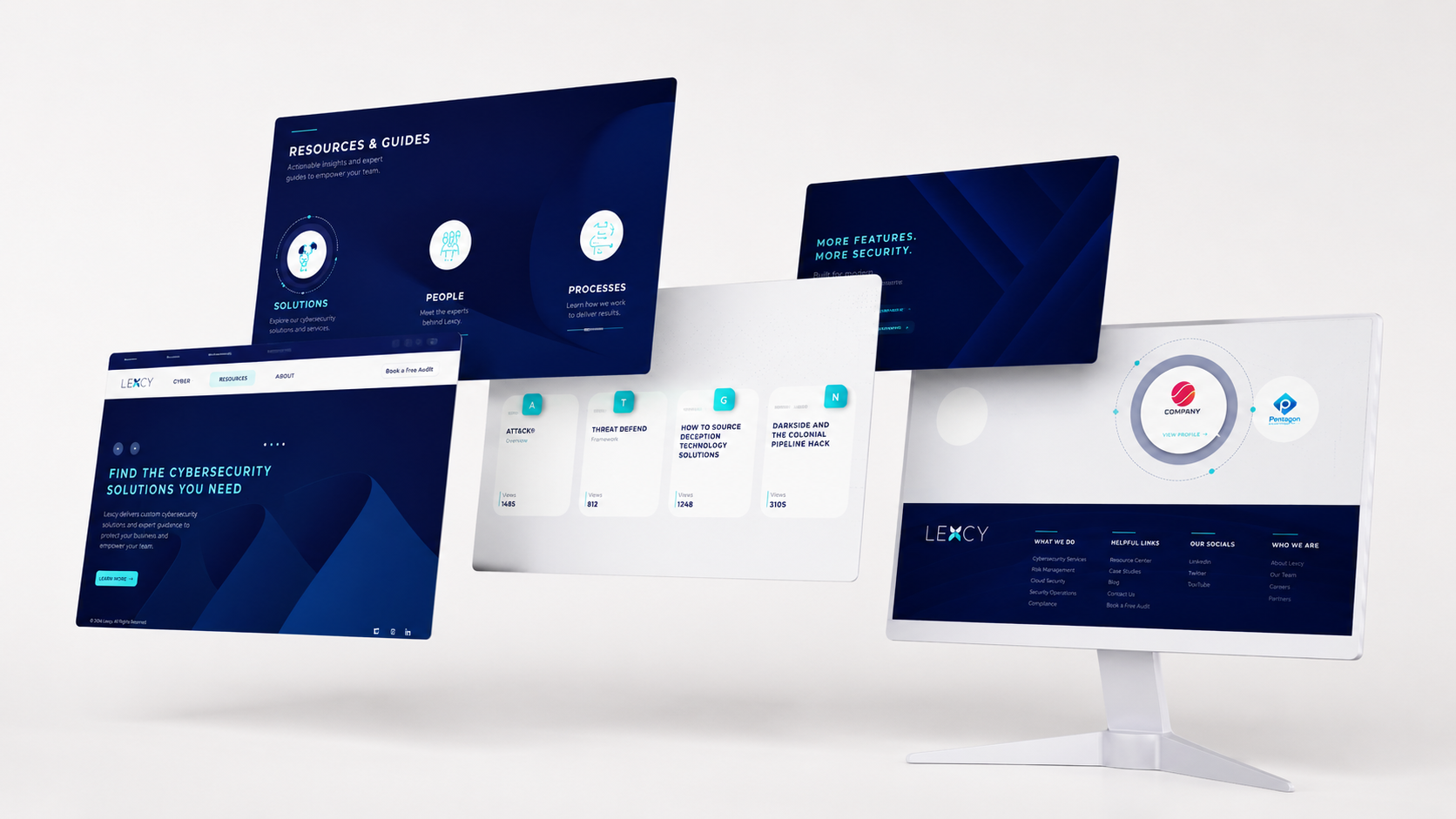
A platform with several connected journeys.
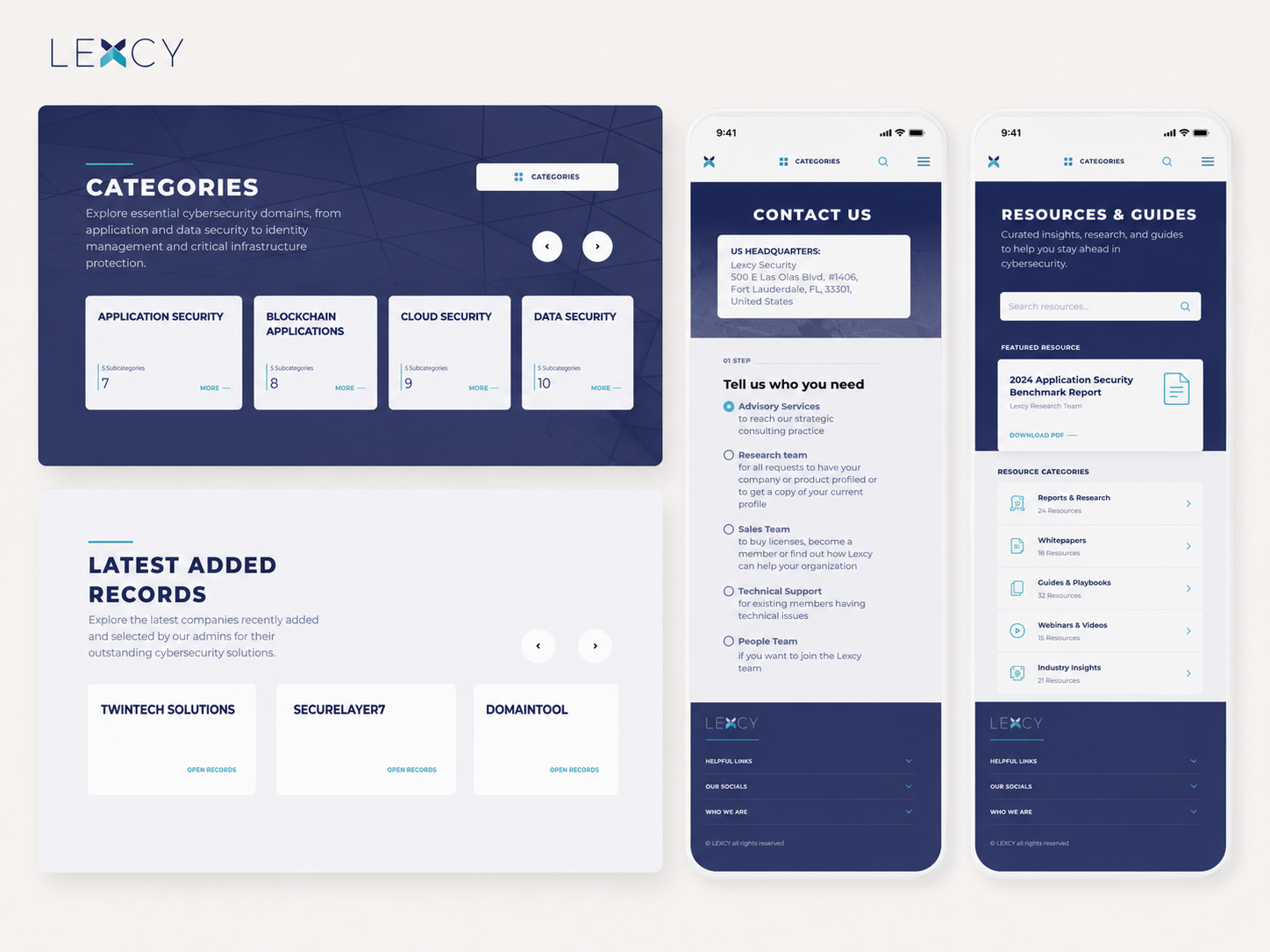
The wider interface system extended across discovery, resources, provider records, memberships and supporting user journeys.
/ 01 — The problem
Making a complex ecosystem easier to enter.
Lexcy needed to organise a wide range of cybersecurity solutions, providers, categories and supporting content without requiring users to understand the entire ecosystem before they could begin.
The challenge was to create clear starting points while still allowing the platform to grow into a deeper technical directory.
/ The full homepage
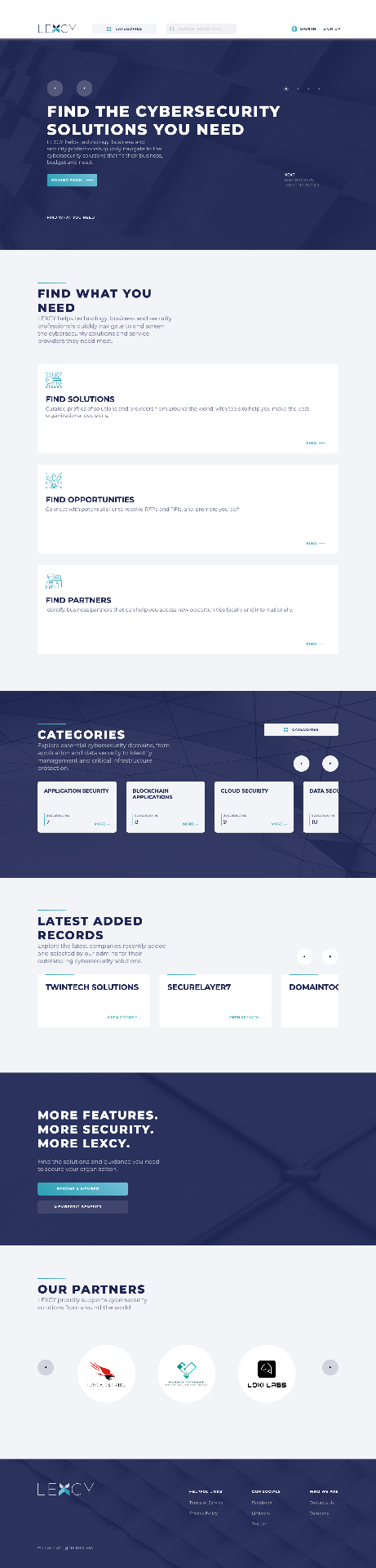
One connected page covering every entry point.
The completed homepage reads as a single editorial document — discovery routes, cybersecurity categories, recently added records, membership content and partner brands all sit within a shared visual rhythm.
Click the image to open the full-length screenshot at readable size.
/ 02 — Process and collaboration
Working closely with product and engineering.
The work progressed in continuous cycles alongside product and engineering — translating evolving requirements into interface structures, refining flows in response to feedback and aligning every screen to the same component logic.
/ 03 — Information architecture
A scalable content hierarchy.
Content was organised through a hierarchy that helped users move from a broad need towards more specialised information — without requiring them to understand the full platform first.
The same hierarchy created a repeatable foundation for adding new categories, providers, opportunities and partner content over time.
/ 04 — Interface planning
Designing the page before designing the pixels.
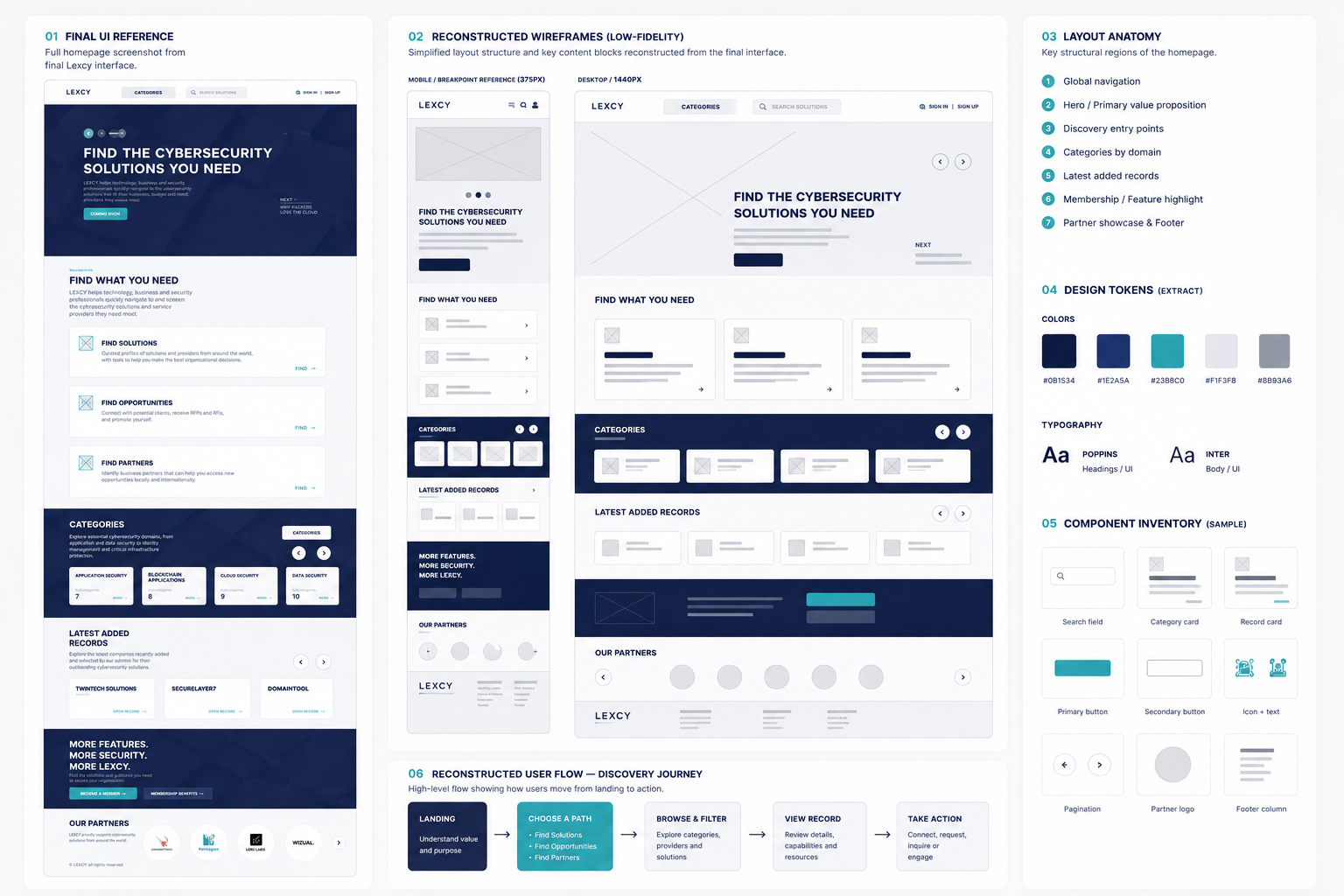
Each page was planned as a sequence of intentional regions — navigation, primary intent, discovery routes, supporting content and partner showcase — before any visual layer was applied.
/ Reconstructed UX workspace
Reconstructing the interface system.
The workspace shows the page structure, repeated interface patterns and primary discovery journey. It has been reconstructed from the completed interface to communicate the design thinking clearly.
/ 05 — The solution
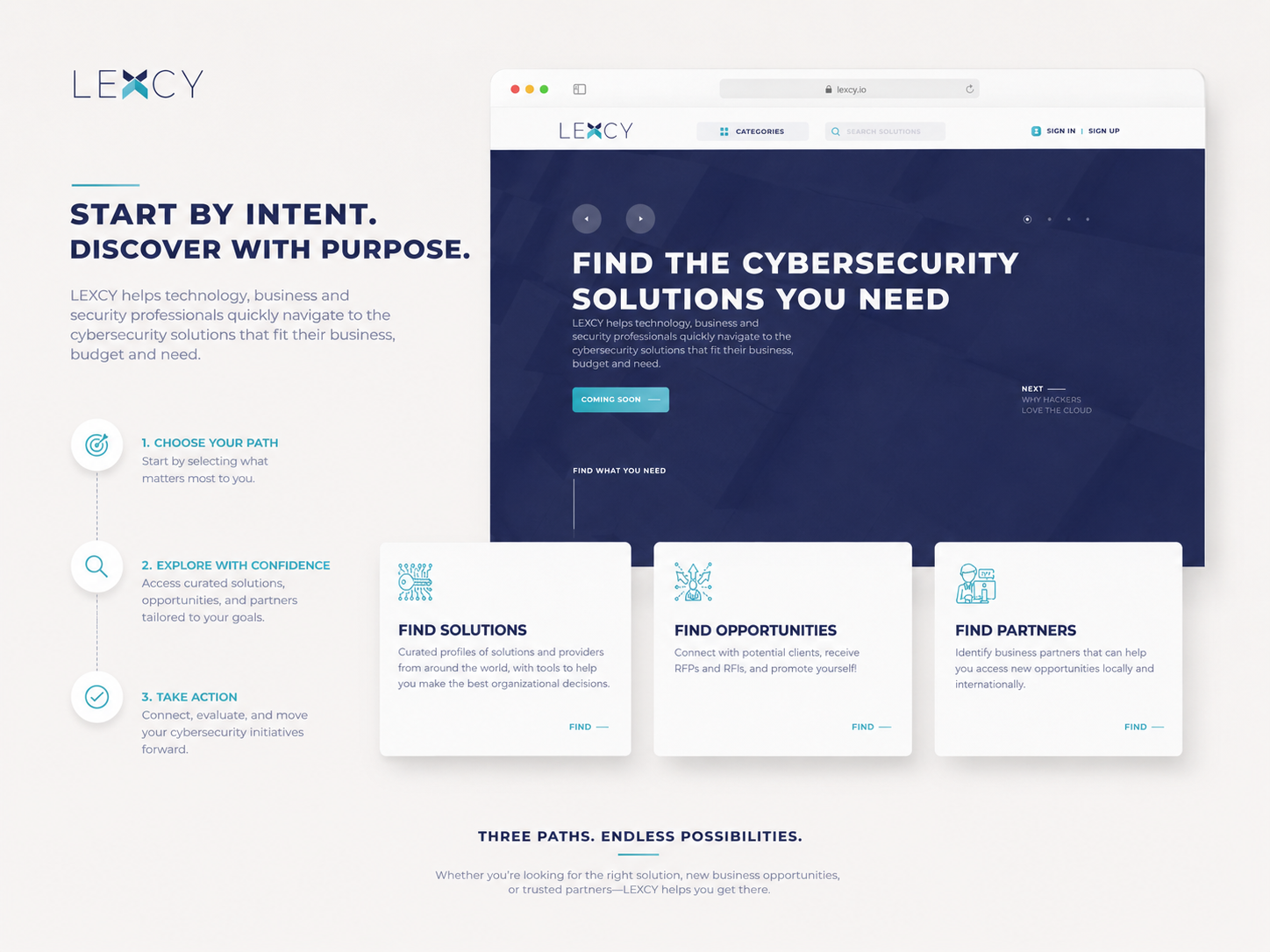
Organising discovery around user intent.
Rather than asking users to understand the full cybersecurity taxonomy first, the platform begins with three clear intentions. These routes give users a more immediate and relevant way into the platform.
- 01Find solutions
- 02Find opportunities
- 03Find partners
/ 06 — Information architecture in practice
Building a repeatable content system.
Reusable category, record and supporting-content patterns created a more predictable experience across the platform.
The same visual language could be applied to discovery, company records, resources and contact journeys while adapting to the needs of each section.
/ 07 — Responsive design
Designed as a responsive system.
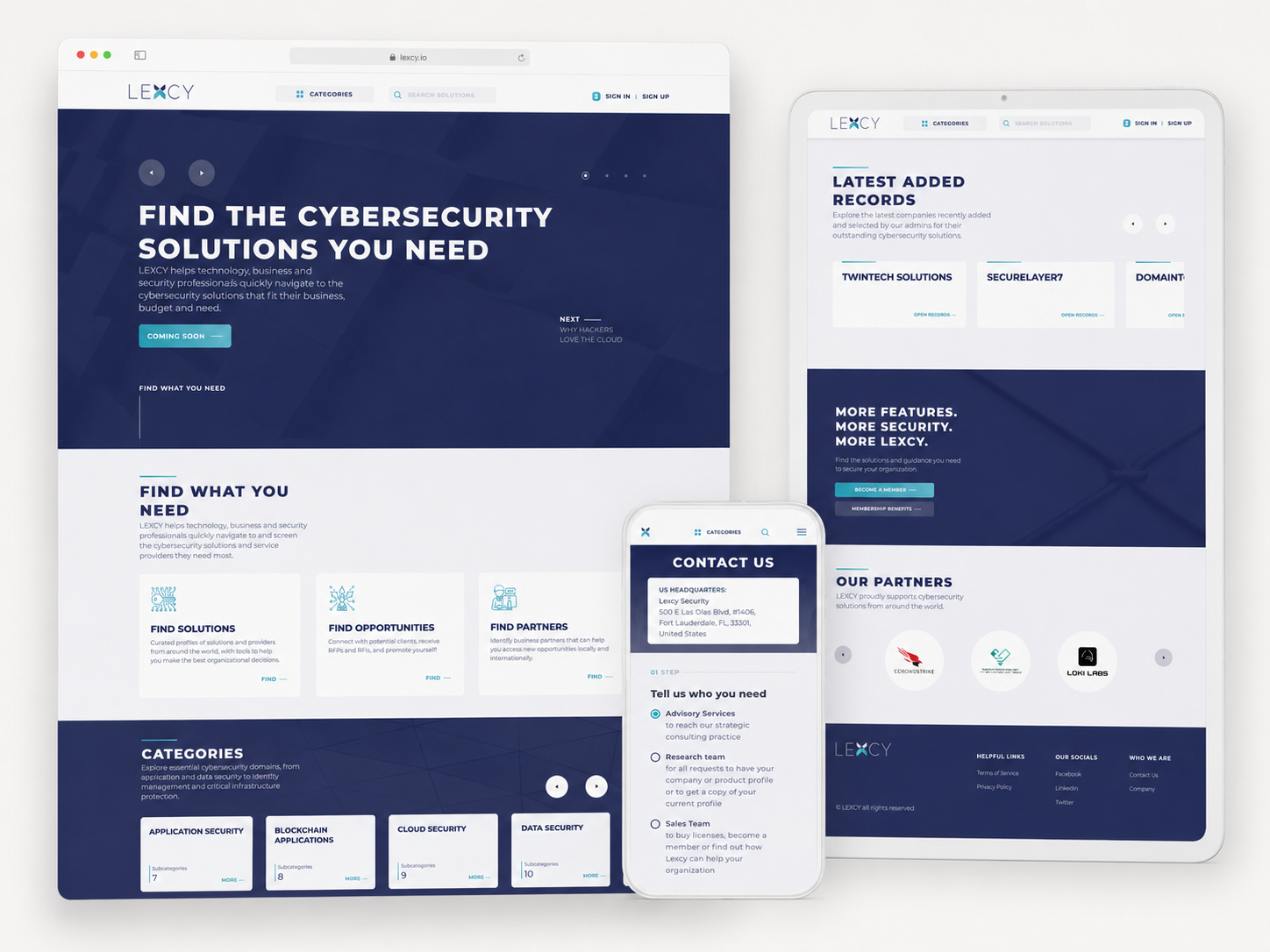
The interface was designed across desktop, tablet and mobile rather than scaled down from one fixed layout.
Content order, spacing, interaction patterns and supporting journeys were adapted according to the needs of each screen size.
/ 08 — Outcome
Outcome.
A beta version of Lexcy launched between late 2025 and early 2026 — establishing a responsive interface foundation for the platform and a scalable system for future content to grow into.
- —Clearer entry points for different user needs
- —A more structured information hierarchy
- —Reusable patterns for categories and records
- —Consistent layouts across desktop, tablet and mobile
- —A scalable foundation for additional platform content
- —A professional visual direction appropriate for cybersecurity
/ What this demonstrates
What this project shows.
- Responsive UI/UX design
- Information architecture
- Design-system and component thinking
- Complex information design
- Cross-functional collaboration
- Organising technical content into clearer journeys
- Long-term digital-product experience
/ Reflection
Reflection.
Lexcy reinforced the importance of organising a platform around user intent before exposing its full complexity.
It also strengthened my experience working on a long-term digital product, where each interface decision had to work as part of a broader responsive system rather than as an isolated screen.